How much does the Poclink POC-2 Titan cost to run?
The POC-2 Titan costs $259 for a 2-pack, and Poclink includes its Standard Global Plan, which it calls free for life. That plan covers 84 countries. Coverage beyond them is paid: $69 or $99 per radio per year. The radio is not free to use worldwide.
| Plan | Countries on Poclink's list | Price per radio |
|---|---|---|
| Standard Global | 84 | Included with the Titan; $29 a year when sold on its own |
| Essential Global | 130 | $69 a year |
| Premium Global | 169 | $99 a year |
- Countries. The 84 are mostly Europe, the US and Canada. Mexico, Brazil and the UAE start on the $69 plan; Japan and New Zealand are on the $99 plan only. Australia, India, South Korea and China appear on none of the three lists (checked 30 October 2026), though one August Trustpilot review describes calls with family in Perth, so ask Poclink in writing.
- Term. The Titan page says both: a spec table with "Lifetime Free SIM Plan" and a feature section with a "3-year standard global plan". The lifetime plan sits under "Special Offer".
- Offer. Poclink's Pro and Ultra FAQ calls free lifetime a summer offer: when it ends, three years are free, then $29 a year or $49 once per radio. The home page marks its no-fee line as a "limited-time offer".
- Keeping it active. Poclink says it will contact you to confirm that the radio is still in use and take you through a verification. Its Terms of Service never mention a lifetime plan.
My view: "no fees" and "worldwide" do not belong in the same sentence here. Before you buy, check your countries on the coverage list, get the plan term in writing and keep your order receipt.
Who makes the Poclink POC-2 Titan?
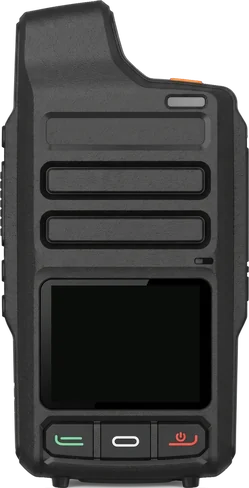
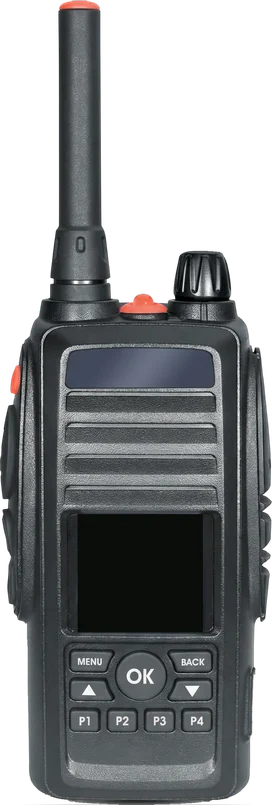
The Titan matches HPYJ's model HP-N350 (Shenzhen HPYJ Technology, FCC ID 2BVZR-HP-N350, granted 6 July 2026): 262 g, GPS, a 1.44-inch screen, a metal frame with corner screws and a knob. Poclink's Titan manual prints the same Las Vegas address as HPYJ USA LLC.
| Item | Poclink POC-2 Titan | FCC record HP-N350 |
|---|---|---|
| Weight | 262 g (manual); 275 g (page) | 262 g |
| Positioning | GPS version sold on poclink.com | GPS 1575.42 MHz, Bluetooth and BLE |
| Screen and battery | 1.44-inch, 3,000 mAh | 1.44-inch, 3,000 mAh |
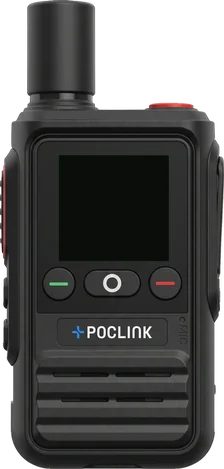
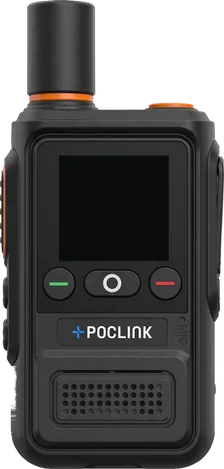
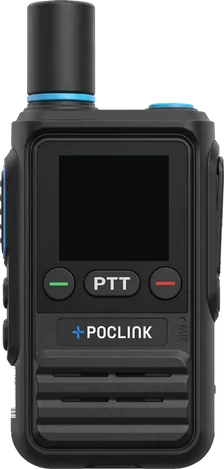
| Build | Knob on top, detachable antenna, green, round and red keys, diagonal speaker grille | The same layout in four colours: Silver, Purple, Green, Titanium; metal frame with corner screws |
| Manual text | Poclink Tech LLC, 5940 S Rainbow Blvd, Las Vegas, Nevada 89118, in the page 2 footer | Group name "Poclink Team" and "Poclink server" on its screens (pages 3 and 4) |
- Same family. The Poclink Lite prints FCC ID 2BN5N-HPN323, held by HPYJ USA LLC at the same Las Vegas address, and a 2025 edition of Poclink's Ultra manual carries HPYJ USA LLC's copyright. The Poclink brand page covers the full list.
- Poclink's own statement. Poclink's About page says it designs its hardware, firmware and app in-house and does not white-label. The records are listed next to it so you can read both.
- The match. The Titan is a match by weight, features and look; the label on a unit shows its own FCC ID.
What do the FCC test files show for the Poclink POC-2 Titan?
The FCC file for HP-N350 lists measured output from about 0.07 W to 0.37 W across US LTE bands, Bluetooth LE, and a highest reported SAR of 0.43 W/kg at the head and 0.79 W/kg body-worn, against the US limit of 1.6 W/kg.
| Band | Output (ERP/EIRP) |
|---|---|
| LTE B2 | 0.37 W |
| LTE B4 and B66 | about 0.18 W |
| LTE B5 | 0.14 W |
| LTE B7 | 0.24 W |
| LTE B12 and B17 | about 0.07 W |
| LTE B13 | about 0.13 W |
| LTE B38 and B41 | about 0.2 W |
| Bluetooth LE, 2402-2480 MHz | 0.00215 to 0.0041 W conducted |
- Bands. The grant covers the US set: B2/4/66, B7/38/41, B5/12 and B13/17. Poclink's page adds B1, B3, B8 and B40.
- SAR. Highest reported: head 0.43 W/kg, body-worn 0.79 W/kg.
- Exhibits on record. User manual (15 pages), external photos in three parts (105 pages), two sets of internal photos, label, antenna specification, SAR report and three test reports. The block diagram, schematics and parts list are confidential.
Do Poclink's POC-2 Titan claims hold up?
Some do, with conditions Poclink's ads play down. Size, weight and material read differently in three documents, and the maker is not the one the About page describes. This table compares the claims with Poclink's own documents, the published specs and the FCC files for the matching model HP-N350.
| Poclink says | What the documents show |
|---|---|
| Unlimited range, global coverage | LTE works only where a mobile network reaches, on a network your plan includes. Poclink's own page adds the condition: when network coverage is available. |
| No monthly or annual fees, no hidden fees | True for the Standard plan in 84 countries during the free term. Wider coverage costs $69 or $99 per radio per year. |
| Coverage in the US and worldwide | The band list has no B20 or B28, the low bands European networks use outside cities. The grant for HP-N350 covers the US set only. |
| Drop it from 15 feet, run over by a 2-ton vehicle | Poclink's own statements, with no test standard named. The rated protection is IPX4: splash-proof, not submersible. |
| 87 x 29 x 55 mm, 275 g, zinc alloy and ABS | The user manual says 135 x 55 x 35 mm, 262 g and ABS. The HP-N350 manual says 92 x 55 x 30 mm and 262 g. The documents disagree on size, weight and material. |
| We design hardware in-house and don't white-label | The Titan matches HPYJ's model HP-N350, and the same Las Vegas address appears on Poclink's manuals and on HPYJ USA LLC's FCC record. |
| One-piece die-cast zinc-alloy unibody | The FCC photos of HP-N350 show a metal frame with corner screws; the Titan manual lists ABS. |
What do Poclink buyers report?
Scores depend on who hosts them: 4.9 in Poclink's own store, 2.6 to 3.8 elsewhere. The reviews below cover Poclink as a company and mostly its POC-1 radios, because the Titan is new. Hands-on figures come from a buyer of the POC-1 Ultra.
| Where | Rating | Reviews |
|---|---|---|
| Poclink store, POC-1 Ultra page | 4.9 | 1,672 |
| Trustpilot | 3.5 | 32 |
| App Store, Poclink app | 3.8 | 24 |
| Google Play, Poclink app | 2.6 | 23 |
- Trustpilot. 53% five-star and 28% one-star. Of the 11 one- and two-star reviews, five describe radios that failed or cut out, three poor or no network, and three delivery or return trouble. Poclink answered 72% of negative reviews. Happy buyers praise clear calls over long distances.
- The app. App Store and Google Play reviews complain most about logins: being signed out, or not getting back in. Some praise support.
- A hands-on review. John Galea bought POC/FRS radios himself for CAD 562 and calls the LTE calls clear, with immediate push to talk. One radio froze after about four hours in patchy coverage and came back only with the battery out, and FRS range looked shorter than his old Motorolas.
- Videos. 12 of the 13 YouTube reviews we found carry affiliate links or discount codes in their descriptions, so treat them as advertising.
- Dependence on Poclink. Galea also points out the risk of the model: if Poclink's servers stop or the radios are discontinued, voice, messages and location stop with them.
- A positive outside view. A June 2026 Kiplinger column by lawyer H. Dennis Beaver recommends Poclink and calls its ads honest. It is about a rival, Rapid Radios, and it does not cover the SIM plan terms.
My verdict: the radio may well do its job for a small group inside the 84 countries. The advertising promises more than the plan delivers, so judge it on the plan you need and treat the Trustpilot complaints as part of the price.
Will it work in your country?
Poclink lists 11 LTE FDD and 3 LTE TDD bands for the POC-2 Titan, including B1, B3, B7 and B8.
Try the push-to-talk apps on the POC-2 Titan
These services list the POC-2 Titan as supported. Pick one and try what it can do.
The radio's keys work too: PTT plays the next call (hold it to talk), the knob or ▲▼ change the group, ◀▶ switch the app’s screens, the red key stops.
About Poclink →Website ↗Ports and buttons
Turn the radio to see every side, the top and the bottom. Tap a row to find the part.
| Antenna | Top left, detachable black antenna with a blue ring at its foot, in a metal screw collar |
|---|---|
| Power and volume knob | Top right, knurled knob with a blue seal ring; turn clockwise past a click to switch on, further to raise the volume, anticlockwise to lower it and past a click to switch off |
| LED | Top, between the antenna and the knob; red while transmitting, green while receiving |
| PTT key | Left side, long blue-outlined key; hold to talk |
| Up key | Left side, below the PTT key; on the home screen opens the group list; scrolls up |
| Down key | Left side, below Up; on the home screen opens the settings; scrolls down |
| Headset port | Right side, under a rubber cover; K-type 2-pin headset |
| Screen | Front, 1.44-inch colour display in a thick black bezel set into the metal frame |
| Menu / OK key | Front, left of the centre key, green; opens the menu and confirms |
| Member shortcut key | Front, round centre key; opens the member list |
| Back key | Front, right of the centre key, red; goes back |
| Speaker | Front, below the keys; black panel with diagonal ribs |
| USB-C port | Bottom; the charging light sits at the bottom left of the port, red while charging and green when full |
| Battery and SIM slots | Back, under the 3,000 mAh battery; SIM slots at the bottom and the clip mount in the centre |
How big is it?
The POC-2 Titan next to other radios, to scale. Pick up to three to compare.
Full specifications
Values come from the sources listed at the end of the page. Where they disagree, both values are shown.
| LTE FDD bands | B1/B2/B3/B4/B5/B7/B8/B12/B13/B17/B66 |
|---|---|
| LTE TDD bands | B38/B40/B41 |
| SIM | Pre-installed SIM under the battery; Standard Global Plan in 84 countries included (Poclink: lifetime; the same page also says 3 years) |
| Connection | 4G and Bluetooth |
| Paid SIM plans | Essential Global: 130 countries, $69 a year; Premium Global: 160+ countries, $99 a year; per radio, one year from activation |
| PTT platform | Poclink app and server; the radio is bound to the app by Bluetooth or IMEI |
|---|---|
| Groups | Up to 100 groups and 200 members per group; upgrade to 1,000 members per group available |
| Noise cancellation | AI noise cancellation (Poclink states) |
| Screen | 1.44-inch |
|---|---|
| Battery | 3,000 mAh, 3.7 V, 11.1 Wh |
| Battery life (published figure) | Continuous use 2-5 days; standby 5 days (Poclink states) |
| Charging | USB-C, 5 V 1 A, 2-3 h; charging temperature +10 C to +50 C |
| Water and dust rating | IPX4 |
|---|---|
| Weight | 275 g (product page); 262 g (user manual and HP-N350 manual)Sources differ |
| Size | 87 x 29 x 55 mm (product page); 135 x 55 x 35 mm (user manual); 92 x 55 x 30 mm (HP-N350 mm manual)Sources differ |
| Housing | Zinc alloy and ABS (product page, one-piece die-cast unibody); ABS (user manual); a metal frame with corner screws in the FCC photos of HP-N350Sources differ |
| Operating temperature | -20 C to +60 C |
| Antenna | Detachable |
| Keys | Power and volume knob on top; PTT key; three shortcut keys for Groups, Member List and Settings; up and down keys open the group list and settings |
|---|---|
| Status LED | Top LED: red while transmitting, green while receiving |
| Headset port | K-type (2-pin) |
| USB | Type-C |
| Bluetooth | Supported; range 33 ft |
|---|---|
| Satellite positioning | GPS in the GPS + SOS version sold on poclink.com |
| SOS | SOS key sends live coordinates to the bound account or group |
| Warranty | 1 year |
|---|
| Matching FCC record | HP-N350, Shenzhen HPYJ Technology Co., Ltd, FCC ID 2BVZR-HP-N350, granted 6 July 2026 (match by weight, GPS, screen, frame and knob) |
|---|---|
| Highest reported SAR (HP-N350) | Head 0.43 W/kg; body-worn 0.79 W/kg |
| Colours in the FCC photos | Silver, Purple, Green, Titanium |
Where sources disagree
- Size, mm87 x 29 x 55 (product page) · 135 x 55 x 35 (user manual) · 92 x 55 x 30 (HP-N350 manual)
- Weight, g275 g (product page) · 262 g (user manual and HP-N350 manual)
- HousingZinc alloy, ABS (product page) · ABS (user manual) · Metal frame with corner screws (HP-N350 photos)
- SIM plan termLifetime (spec table and FAQ) · 3 years (feature section of the same page)
- LTE bandsB1/2/3/4/5/7/8/12/13/17/66/38/40/41 (Poclink page) · B2/4/5/7/12/13/17/38/41/66 (HP-N350 manual)
Questions
Is the Poclink POC-2 Titan free to use worldwide?
No. The included Standard Global Plan covers 84 countries. Poclink sells wider coverage at $69 or $99 per radio per year, and its page gives the included plan as both lifetime and 3 years.
Who makes the Poclink POC-2 Titan?
The Titan matches HPYJ's FCC model HP-N350 (Shenzhen HPYJ Technology): 262 g, GPS, a 1.44-inch screen, a metal frame and a knob. Poclink's About page says it designs its hardware in-house and does not white-label.
Is the Poclink POC-2 Titan legit?
Poclink Tech LLC sells real radios and buyers report working calls. Ratings run from 4.9 in its own store to 3.5 on Trustpilot and 2.6 on Google Play, and the free plan covers 84 countries for a term.
Which LTE bands does the Poclink POC-2 Titan support?
Poclink lists FDD B1, B2, B3, B4, B5, B7, B8, B12, B13, B17 and B66 and TDD B38, B40 and B41. The matching FCC manual lists the US set only. Use the Band Checker on this page.
How big and heavy is the Poclink POC-2 Titan?
The product page gives 87 x 29 x 55 mm and 275 g; the user manual gives 135 x 55 x 35 mm and 262 g; the HP-N350 manual gives 92 x 55 x 30 mm and 262 g.
What is the POC-2 Titan made of?
The product page describes a one-piece die-cast body of zinc alloy with ABS parts; the user manual lists ABS. The FCC photos of the matching HP-N350 show a metal frame with corner screws.
What do buyers say about Poclink?
Poclink's store shows 4.9 from 1,672 reviews, Trustpilot 3.5 from 32, and the app 3.8 on the App Store and 2.6 on Google Play. Complaints centre on faulty radios, network coverage, delivery and app logins.